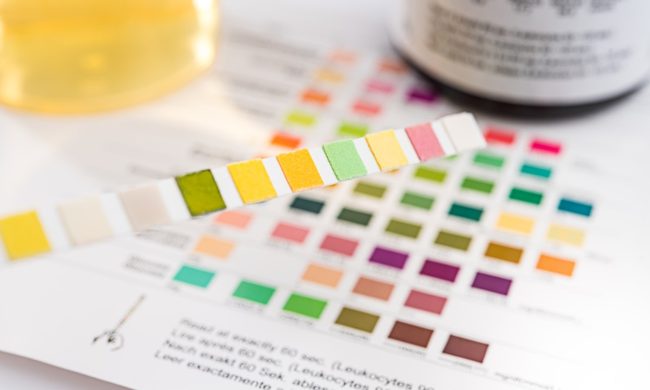
As COVID-19 vaccines have begun rolling out in countries worldwide, many are looking forward to traveling again and returning to their normal lives. In the United States, nearly 20% of the population is already vaccinated. Though wearing masks and social distancing are here to stay, many are wondering what comes next? For months, people have been discussing the use of vaccine passports as a way to prove inoculation. While these conversations have been mostly hypothetical, the plans have become more concrete as more and more people are getting vaccinated. But enacting plans for vaccine passports is anything but simple; many have ethical and privacy concerns about these documents. So, what exactly are vaccine passports? Keep reading to learn everything you need to know.
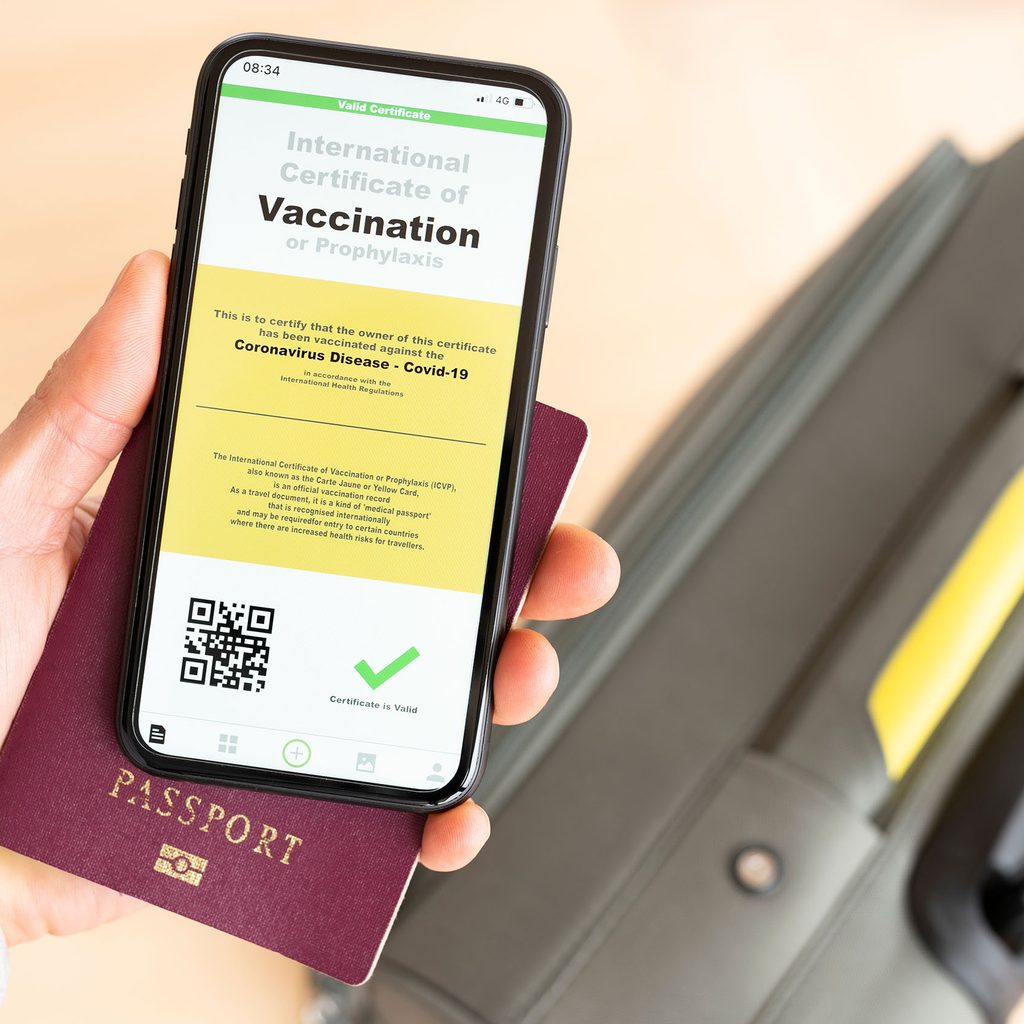
What is a vaccine passport?
A vaccine passport is a digital certificate used to prove that you are vaccinated. The smartphone app would produce a QR code that could be scanned when you want to gain entry to a business or event that requires vaccinations. Typically, there are two reasons you would be asked to produce a vaccine passport: when traveling internationally or day-to-day for work, restaurants, or private events.
As of right now, there are a few organizations working to create passports. The International Air Transport Association, a trade group representing 290 international airlines, is developing an app called Travel Pass. Twenty-three airlines, including Virgin Atlantic and Qantas, are testing the app, which is slated to launch in mid-April. CommonPass is another vaccination app created by The Commons Project Foundation and the World Economic Forum. It has already signed on United Airlines, JetBlue, and Cathay Pacific as initial partners. Other vaccine passport apps include IBM’s Digital Health Pass, Clear, AOKpass, and Passport for COVID.
Keep in mind that a vaccine passport is not an immunity passport. Experts still don’t know exactly how long immunity lasts after receiving a vaccine or recovering from the virus. It’s also unknown whether vaccinated people can spread the virus without experiencing symptoms. Although, given the current data, that seems unlikely.

Are vaccine passports currently being used?
Vaccination passports are not currently in use for international travel. However, New York state has created an app called Excelsior Pass. Though it’s still in trials, the app would allow users to gain access to businesses and entertainment venues. Hawaii Governor David Ige also approved a vaccine passport program on April 9 that will be used inter-island and for out-of-state travel. The program is set to roll out by the summer.
Some countries have also changed entry requirements for vaccinated international travelers. Iceland was one of the first countries to let vaccinated people visit without testing or quarantining. Belize, Montenegro, Seychelles, Croatia, Guatemala, Estonia, and Ecuador have made similar changes to their travel requirements.
Many countries are eager to enact a vaccine passport plan, including Denmark, Sweden, China, Japan, Estonia, Greece, Aruba, and more. Some businesses, especially airlines, cruise lines, and others in the hospitality and travel industries, are also interested in the idea. For example, Qantas will require anyone traveling to Australia to be vaccinated to fly. And, Norwegian Cruise Lines has announced that all passengers with cruises booked through October 31 will need to be vaccinated.
What about in the United States?
Vaccine passports are a hot-button issue in the United States. There are currently no plans by the U.S. federal government to create a vaccination passport. On April 6, White House Press Secretary Jen Psaki said, “There will be no federal vaccinations database and no federal mandate requiring everyone to obtain a single vaccination credential.” Some states have gone even further, creating outright bans of vaccine passports. Florida and Texas have prohibited the use of COVID-19 vaccine passports in the states. Governors from Georgia, Iowa, Nebraska, and Tennessee have also stated their opposition to state-mandated vaccine passports. On the other side of the issue, New York and Hawaii have already begun rolling out their vaccination passport programs.
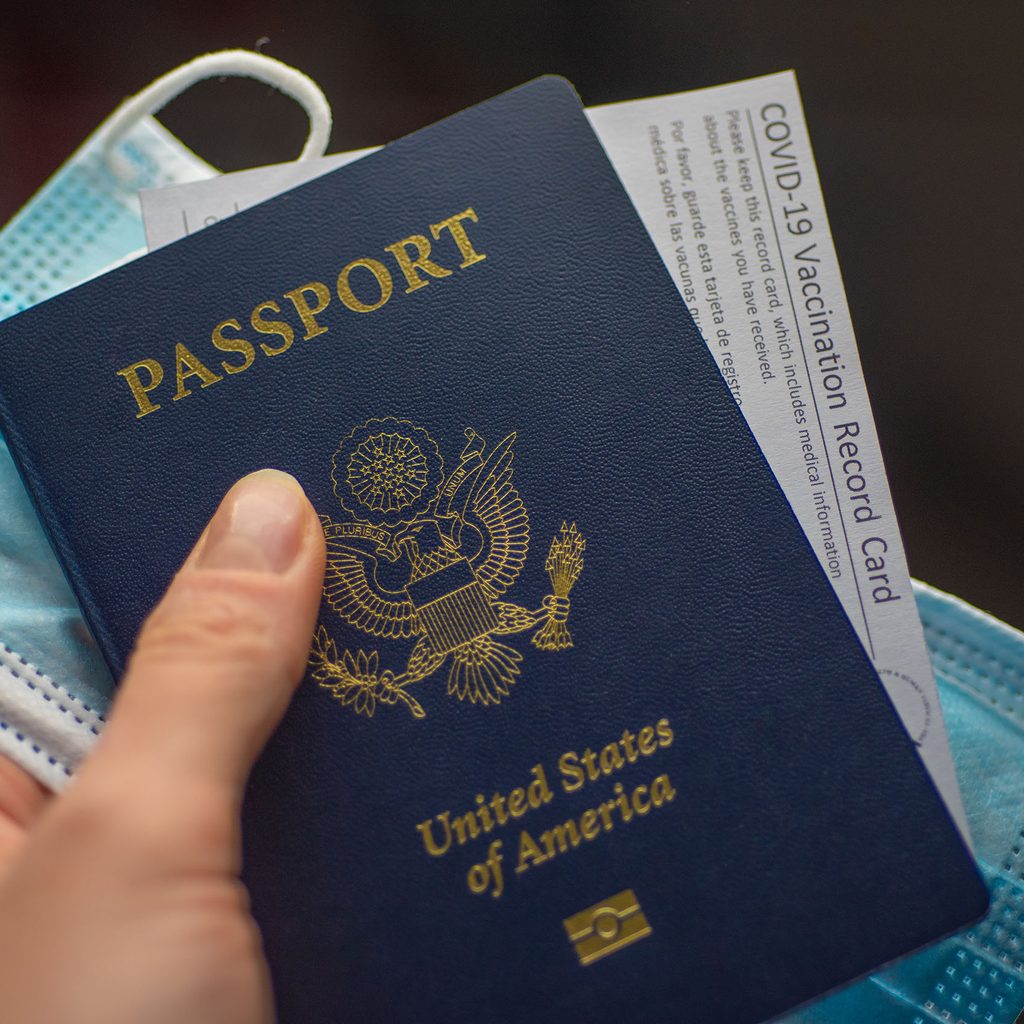
Advantages of using vaccine passports
Here are a few of the arguments for enacting a vaccination passport program:
- They could bring about a faster return to regular life.
- It could allow countries to reopen their economies totally.
- It may encourage people to get vaccinated, which would limit coronavirus transmission.
- They could offer better protection for front-line workers in the service, travel, hospitality, and medical industries.
Disadvantages of using vaccine passports
These are a few of the arguments against vaccine passports:
- They could result in discrimination and inequality for people in developing countries where vaccines are less available and those who are unable to get vaccinated because of medical, cultural, or religious reasons.
- The apps will contain critical personal data, which raises privacy concerns.
- They could make an unethical global incentive for vaccinating travelers instead of prioritizing high-risk populations.
- The vaccine does not create total immunity, which may create a false sense of security and lead to reckless behavior.
Vaccine passports are a contentious issue in the United States. Whether or not you’ll need one in the future depends largely on where you live and your lifestyle. If you plan to stick close to home, you may not need one, but if you’re looking forward to international travel, the response of many companies in the travel industry seems to indicate that having proof of vaccination will be important in the near future. Of course, those in charge of these passports will need to make sure they’ve worked out any data-security and health-equity issues first.
BlissMark provides information regarding health, wellness, and beauty. The information within this article is not intended to be medical advice. Before starting any diet or exercise routine, consult your physician. If you don’t have a primary care physician, the United States Health & Human Services department has a free online tool that can help you locate a clinic in your area. We are not medical professionals, have not verified or vetted any programs, and in no way intend our content to be anything more than informative and inspiring.