The sweetener wars are heating up. With sugar and corn syrup having earned bad nutritional reputations over recent years, people are increasingly turning to other sources.
One of the more popular entries is stevia, a plant-based sweetener. There is also another class of sugar substitutes called sugar alcohols, with erythritol leading this pack in popularity. Both are widely considered safe to use and can often be substituted for one another. That raises the question: Which sweetener is the better of the two?
Here’s a rundown of the key nutritional facts you need to know about each one, including calorie and carbohydrate counts. We’ve compared stevia versus erythritol head-to-head to see which, if either, emerges victorious.
What is stevia?
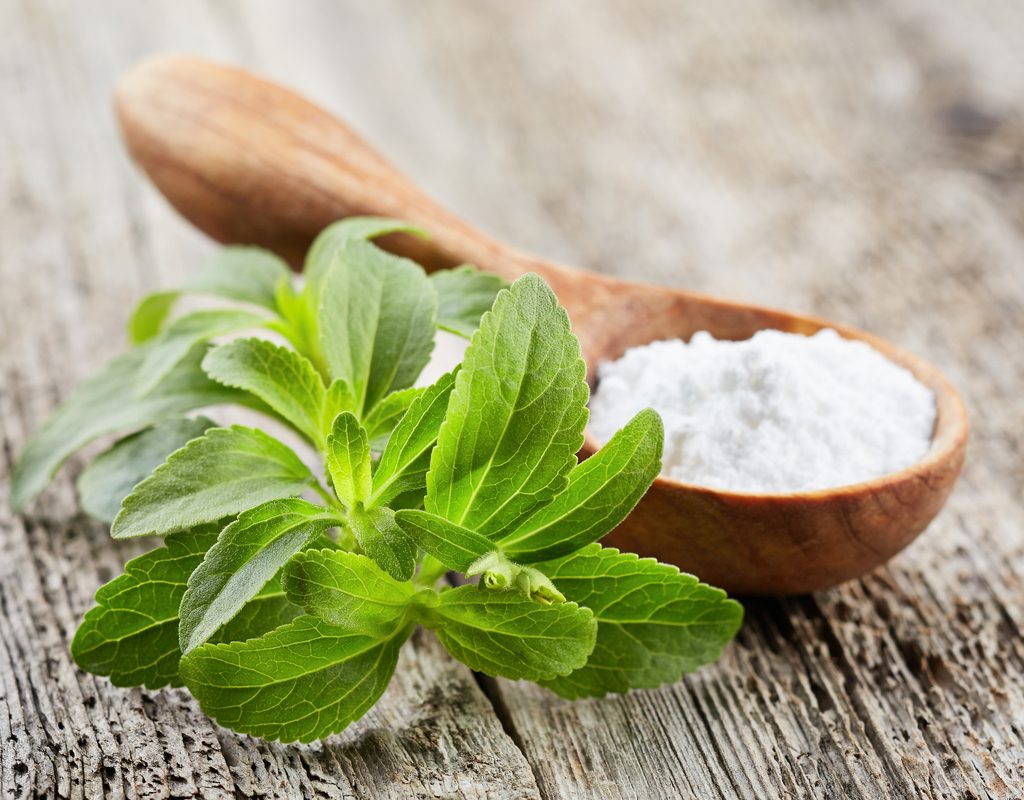
Stevia is derived from the leaves of the Stevia rebaudiana plant, which is a native of South America. Indigenous people of that continent have used stevia leaves to sweeten medicines and teas for more than half a century. A little goes a long way when you select this option. Stevia can be 200 to 300 times sweeter than sugar.
Stevia is increasing in popularity as both an effective sugar substitute and a “natural” alternative to artificial sweeteners like sucralose (Splenda) or sugar alcohols like erythritol. One study estimates that the global stevia market will be a half-billion-dollar business by 2024.
There are no calories in stevia
Stevia’s overall nutritional profile can be summed up with one word: nothing. As such, you probably shouldn’t make Stevia the linchpin of your diet. Luckily, what it lacks in nutritive value it makes up for with an equivalent lack of calories, since your body does not store or break down the substance.
Stevia contains no carbs
The full profile for one packet of Stevia, according to the United States Department of Agriculture, is zeros down the board. In addition to no calories, this sweetener has no fat, sodium, carbohydrates, fiber, sugar, or protein.
Nutritional benefits are limited to reduced-calorie and sugar intake
The USDA classifies this product as a “non-nutritive sweetener.” Therefore, Stevia’s main benefit isn’t that it delivers vitamins or antioxidants, but because it reduces calorie and sugar intake.
What is erythritol?
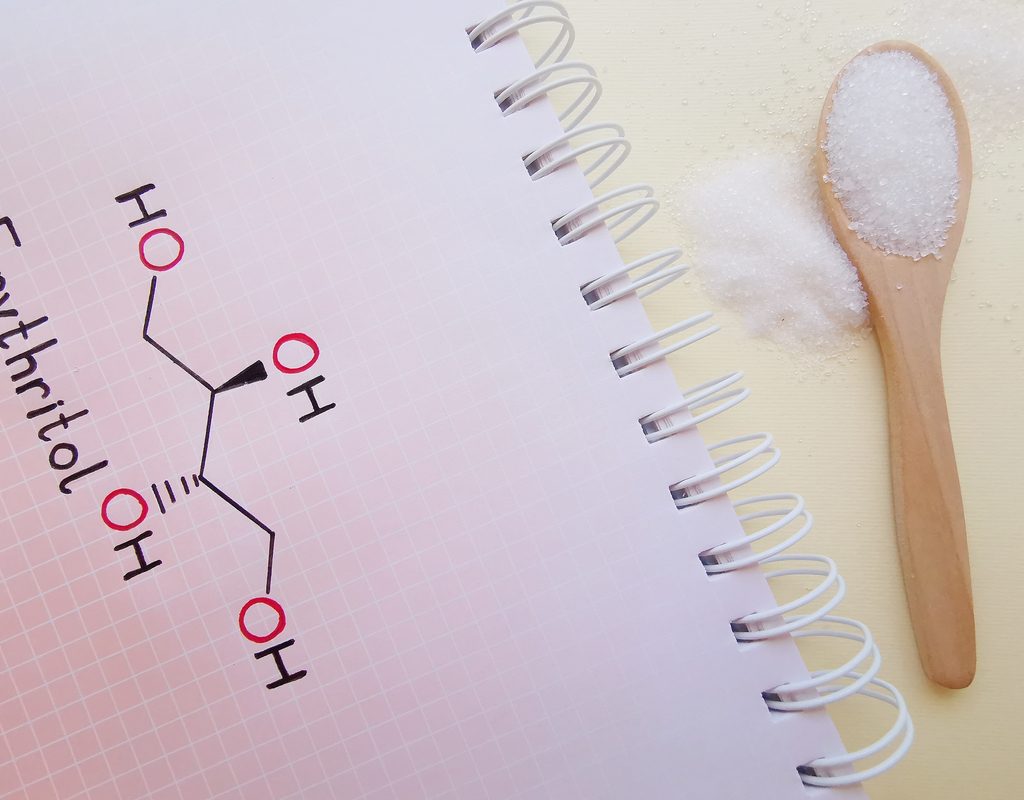
Sugar alcohols like erythritol can occur naturally in fruit and other sources, but as a commercial product, they are generally made from corn or wheat starch.
Sugar alcohols are relatively new to the American landscape, at least at their current levels of popularity. Many different foods, from cookies to energy bars, contain sugar alcohols. If you see the “sugar-free” label on your favorite drink or snack, there’s a decent chance it contains erythritol or another sugar alcohol.
Compared to stevia, erythritol packs much less of a sweetness punch, clocking in at just 70% of the sweetness of sugar. However, it feels and tastes much like sugar with no bitter aftertaste, which can be a problem with stevia.
Erythritol is not zero-calorie, but it’s close
Erythritol is not technically a zero-calorie sweetener, with 0.24 calories per gram. This is obviously not much, especially when considering that erythritol is not broken down in the digestive system and thus cannot be changed into glucose and used as energy (or stored as fat) in the body. This is great news for those looking to cut calories.
Carbs can be found in erythritol, but they don’t matter
A quick look at a nutrition label for a product containing erythritol may set off alarm bells, as it usually shows that the product contains significant amounts of carbohydrates. However, this is where the magic of “net carbs” comes in. Erythritol contains about four grams of carbs per teaspoon but has zero net carbs because the body is unable to break it down.
Erythritol is an antioxidant
Erythritol, unlike Stevia, is considered an antioxidant that can reduce the risk of heart disease and control diabetes. It has also found use as an excellent oral health-friendly sweetener for toothpaste.
Final word
The health benefits of erythritol, while modest, would put it just ahead of stevia if not for one side effect. When used in excess, erythritol can cause bloating, gas, and diarrhea.
An additional consideration is heat stability. It’s important to know that if you are baking, stevia is stable up to 392° Farehnheit (200° Celsius) while erythritol begins to break down above 320° Farehnheit (160° Celsius). So, if you are using a sugar substitute in your baking, stevia may be a better choice. Whichever you choose, don’t expect that beautiful browning and caramelization sugar delivers.
Still, both stevia and erythritol are better choices than artificial sweeteners like sucralose and aspartame and natural sweeteners like sugar and corn syrup. Choosing either is a step in the right direction.
BlissMark provides information regarding health, wellness, and beauty. The information within this article is not intended to be medical advice. Before starting any diet or exercise routine, consult your physician. If you don’t have a primary care physician, the United States Health & Human Services department has a free online tool that can help you locate a clinic in your area. We are not medical professionals, have not verified or vetted any programs, and in no way intend our content to be anything more than informative and inspiring.